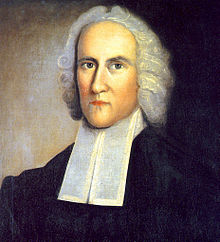
The Blog of Jack Holloway
Showing posts with label heresy. Show all posts

Tuesday, August 16, 2016

Ariel Pink is a Heretic

As Secretary-treasurer of the International Society for Heresy Studies, I attended the ISHS conference in June. After the conference, we were asked to write a reflection on what we encountered at the conference. My reflection ended up being a profile of Ariel Pink as a heretic. The piece is featured in the ISHS newsletter, but I figured I would post it here. 

At the 2016 Heresy Studies conference I was particularly struck by Jeff Robbins’ discussion of what it might mean to be a heretic today. He first looked at the example of Spinoza, who was condemned as a heretic. What qualities did this event have that can be found today? Robbins emphasized two: loneliness and sacrifice. A heretic is one who espouses something that alienates her and costs her. A heretic is an outcast, one who occupies a negative space, rejected on more than one front. A heretic is also someone who suffers for what she espouses. Robbins offered Pier Paolo Pasolini as a potential heretic today. I suggest Ariel Pink to be another.

Ariel Pink is an experimental pop musician. In addition to being a musical genius, he is known as “the most hated man of indie rock.” This is because of the way he has presented himself to the world. His philosophy is to “get in touch with your weird.” In Ariel Pink’s life, this has often manifested itself in outlandish and offensive statements in interviews, on stage, and on social media. Pink, says a writer for The Guardian, not only deviates from the artist’s script of kneejerk liberalism, but rips it up entirely, which has led him into strange territory. “It’s not illegal to be an asshole,” he says, in response to a question concerning misogynistic comments he made when he recalled being maced by a feminist. He had initially responded to the accusation by tweeting, “What if I committed suicide and tweeted, ‘Thank you, guys. You were right’?” Pink has also playfully criticized homosexuals for wanting to get married, and has flippantly dismissed activist groups.

It is difficult when encountering certain statements from Pink not to think of Donald Trump (a comparison Pink might actually invite!). However, Pink seems less invested in what he’s saying, and he says it with an understanding that he does not have a substantial group of defenders. His fans may like the music, but that does not stop them from despising (or at least objecting to) the person. His purpose (if he can be said to have one) is, for better or for worse, to be subversive to a P.C. culture that claims the moral high ground and polices speech. What I thought about when I was listening to Robbins’ lecture was that the most hated man in the indie rock world—a world characterized by hypersensitive reactionism—takes up a heretical position. It has, as Robbins says of the heretic, cost Pink a lot, taking a toll on his life and career. Pink, like Pasolini, stands alone, and without defense.

That heretics are cool seemed to be a common sentiment at the Heresy Studies conference (and, generally, you wouldn’t look to me to contradict it). Pink, however, gives us an example of a heretic who may actually not be cool. While the subversive role is a much-needed one, heretics give us no guarantee that we’re going to like the way they play it.

Monday, March 25, 2013

Universal Reconciliation Q&A

"I have reason to believe we all will be received in Graceland."
Paul Simon

I recently wrote a blog (here) advocating the doctrine of universal reconciliation. I knew there would be plenty of challenging questions in response, so I wanted to take some of them and respond to them here.

(I want to add to this, so please send me a question if you've got one to add.)

Yes, God is love, but he is also just. Though he wants all people to be saved, he also desires justice.

I have a few things to say in response to this.

First, universal reconciliation doesn't remove justice from the picture. Was justice not served when the prodigal son ended up fighting with pigs over food after demanding his inheritance and abandoning his father? In the same way, justice will be served when those who have chosen Hell on earth will get what they wanted. God's wrath is letting them have it (click here for a more thorough explanation of this view of God's wrath).

Secondly, what happened when the prodigal son returned?
In that day, it would have been the custom to make the son sit outside the home for days to prove that he was genuine in returning home. But when the son in the story returned, was the father so concerned with justice that he made him do this? Or did he run out to him (in that time, N. T. Wright provides, running was thought to be "undignified")(1) and embrace him? Did the father stop his son and ask him all kinds of questions to see if he was worthy of returning?

The son had a whole speech planned, and in it he was merely going to ask the father if he could become a slave in his house. The father wouldn't have it. He was just so happy that his son was returning.
Does this seem like a father that is super concerned about justice when it comes to his children?
Many say universal reconciliation is too human, but in this case, even the son himself was only expecting to be made a slave! In this case, the human version of justice wasn't good enough for God!

Finally, Jesus is a testament to the fact that [human perception of] justice is not God's main concern. He says something very interesting in John 12: "If anyone hears my words but does not keep them, I do not judge that person. For I did not come to judge the world, but to save the world" (v.47; also see Jn. 3:17). He then adds, "The one who rejects me and does not receive my words has a judge" (v.48). He is implicating God the Father here (see vv.49-50). However, elsewhere Jesus tells us that "the Father judges no one, but has entrusted all judgment to the Son" (Jn. 5:22). So, the Father is not the judge, but hands judgment over to the Son, and the Son does not come to judge the world but to save it! Yes, there is judgment. Yes, there is justice. But "mercy triumphs over judgment" (Jas. 2;13). Ultimately, God's purpose is to save the world and not condemn it forever and ever, so Jesus will have mercy on those who reject him in this life. Timothy Jennings says beautifully, "biblical justice is delivering the oppressed, not punishing the oppressor!"(2)

(I elaborate more on this topic in another blog, here)


Can't "all people" simply refer to all races, cultures, and groups rather than literally every single person who ever lived?

In some cases, you can look at it that way, like when it says "all nations" or "all the ends of the earth." However, it is not more valid to interpret it this way. For other verses, I don't think you can avoid it by saying that it refers to all kinds of people. For example, when Psalm 65:2 says all people will come to God, the Hebrew words there don't mean, literally, "all flesh," same as 145:21.

In John 12:32 and 1 Cor. 15:22, the Greek text doesn't actually say "all people," but only says "all," and the Greek word for all literally means all, every kind of, each and every one, the whole.
 I don't see how you get past that.

If the Greek and Hebrew words for "forever" don't actually mean forever, wouldn't that also mean that God's love doesn't have to go on forever, since the same words are used to describe God?

I get this one a lot. It's a good point, but it stops short of disproving universal reconciliation because of two things:

1) I didn't say the Greek and Hebrew words for eternal can't mean forever. The reason these words don't have to mean forever is because they don't refer to an actual duration of time, because the biblical writers didn't think about forever and ever. They thought in generations and ages. Hell and God are similar in the sense that they are both beyond ages and generations, and their ends are not in sight to humans. When it says God's steadfast love goes on "forever and ever," it's really saying that it goes on and on and the end of God's love is not in sight.

I know what you're thinking. Wouldn't that mean that God's love can end?
No, and this leads to my second point:

2) These are not the only words used to describe God. Other words were used to describe God's everlasting characteristics. For example, God's love is said to never end. Nowhere does it say that Hell will never end.

Consider this illustration: the sun is huge.  Its circumference is 2.715 million miles long. We use words like enormous, gigantic, and humungous to describe how big the sun is, because it's so big we can't actually conceive of how big it is. The universe is also  enormous, gigantic, humungous. It goes on for billions upon billions of light years.

While the sun is enormous, it does have an end. The universe doesn't (well...maybe it does, but I'm not going to get into that; you get the point). Likewise, how long God lasts and how long Hell lasts can both be said to be olam or aion, it can also be that God can last forever while Hell ends at some point, because the words used to describe them doesn't actually specify a duration, just like the word humungous doesn't specify an actual size.

I should also add that this problem with these Greek and Hebrew words still comes up no matter what you believe about Hell. The Hebrew word olam (which is "supposed" to mean forever) is used by Jonah to describe how long he was in the belly of the fish (2:5-6). If it can be used to describe a period of 3 days, this word clearly doesn't have to mean forever.

If Hell is not forever, wouldn't that demean the atonement?

Maybe it would, if the only reason Christ died on the Cross was to save people from an everlasting Hell. But I don't believe this was the only reason, nor do I believe that this is the central reason.

Christ died on the Cross so that God could be in an intimate relationship with his creation. Throughout the Old Testament, God is trying everything he can to be in relationship with his people. All of human history is God in search of man. Jesus is a continuation of that story. The Cross is the greatest point in human history where we can see God in search of man, and I believe that story will continue even after death.

The atonement is many things. Let's not make it just about saving humanity from a never-ending Hell. It's so much more than just that.

I should also add that the doctrine of universal reconciliation doesn't take any of the horror out of Hell. One of the reasons for the atonement was still to save people from the horrible place in which they would experience all the consequences of their own sinful choices. It's not like Hell is any less terrible because it doesn't last forever and ever.

Consider this illustration: let's say all of humanity signed up to get addicted to cocaine at a certain point (it's a silly example, but sin is also silly). When God saw this, he sent Jesus to give them a way to avoid this doom. Some didn't accept his invitation, so they still headed to cocaine addiction. Sure, there's always rehab, but forcing oneself to submit to rehab while addicted to cocaine is incredibly hard, and the process of rehab isn't any easier. It doesn't take a Christian to tell someone to avoid cocaine. Why do most people avoid it? because they know that, though it promises euphoria, it leads to a terrible experience of which it takes what feels like a lifetime (here would be a good place for the word aionios) to break free.

Hell, like a cocaine addiction, is an awful fate no matter how long it is. Thank God he gave us a way out!

Isn't universal reconciliation an altered form of Calvinism's irresistible grace? Wouldn't the idea that God will eventually win all people over contradict free will?

I have a few things to say in response.

One, I am not saying that as long as there is a Hell, God is going to be turning up the heat, if you will, on his love so that he will become irresistible to people. I am saying that as long as there is a Hell, God is going to continue to do everything he can to save people from it. But as long as people have free will, they can reject him.

I will use an example to illustrate my point: let's say I find out that my friend Matt hates me. I can choose to ignore that fact and go on living my life forgetting that I love his friendship. But I do love his friendship, so instead I pursue him and am absolutely determined to find reconciliation. If I finally get to the point where Matt chooses to be my friend again, it wouldn't be because I overrode his free will, but because I pursued him long enough. In the same way, whenever God finally reconciles all people to himself, it will not be because he obliterated their free will with his love, but because he pursued them long enough.

Two, forever is a very long time. I don't think the day after judgment day God is going to win everybody over. Some will insist on Hell for a very, very long time. I just don't think God is ever going to stop pursuing those people.

Three, what I stress in universal reconciliation is not that everyone is going to be saved, but that God is never going to stop pursuing people. I stress this because I have no idea when everyone is going to be saved, and if it weren't for Scripture, I wouldn't believe it. It is because Scripture tells of a day when all people, all flesh, everyone will come alive and worship God that I believe that some day God will succeed in drawing all people to himself.


Have a question to add? Send it to me! 

Notes:
(1) N.T. Wright, After You Believe (New York: HarperOne, 2010), 12.
(2) Timothy Jennings, The God-Shaped Brain (Downers Grove: InterVarsity Press, 2013), 188.

Tuesday, March 19, 2013

Is God a Universalist?

"I am not a universalist because there are some people that I don't want to see again. But God may be."
Jurgen Moltmann

Which Universe Do I Live in?

Before I get into a defense of Universalism, I should clarify which form of Universalism I am defending.

I don't believe that all roads lead to God, or that it doesn't matter how people live in this life because they will all be in Heaven when they die. Nor do I deny the existence of Hell.

I believe in Universal Reconciliation, which states that as long as there is a Hell, God will be trying to reconcile all of its inhabitants back to himself. In this, Jesus is the one way to salvation, but eventually everyone will choose to say Yes to him.

Is Universalism in Scripture?

Any Bible-believing Christian must at least recognize that Universalism is something God wants.

1 Timothy 2:4 says that God "wants all people to be saved and to come to a knowledge of the truth."

We are told in 2 Peter 3:9 that God "is patient with [us], not wanting anyone to perish, but everyone to come to repentance."

Similarly, in Ezekiel 33:11, God says, "I take no pleasure in the death of the wicked, but rather that they turn from their ways and live." So, at the very least, Unversalism sounds just as wonderful to God as it does (or should) to us.

But can we go further than that and say that all people will actually be saved?

The Psalmist of Psalm 65:2 says to God, "to you all people will come."

Psalm 86:9 says, "All nations whom you have made shall come and worship before you, O Lord, and they shall glorify your name."

Psalm 145:21 says, "all flesh will bless his holy name forever and ever."

Isaiah 2:2 says that "all nations will stream" to "the mountain of the LORD's temple."

Then, in 52:10, we are told that "all the ends of the earth will see the salvation of God."

Jesus says in John 12:32 that "when I am lifted up from the earth, I will draw all people to myself."

Paul tells us in 1 Corinthians, "as in Adam all die, so in Christ all will be made alive" (15:22).

He tells us in Philippians that, "at the name of Jesus every knee will bow, in heaven and on earth and under the earth, and every tongue acknowledge that Jesus Christ is Lord" (2:10-11).

The writer of Hebrews quotes what God revealed to the prophet Jeremiah, that "No longer will they teach their neighbor, or say to one another, ‘Know the Lord,’ because they will all know me, from the least of them to the greatest" (8:11).

So it appears there are actually several places throughout Scripture that support Universalism. How then do we reconcile these verses with verses that talk about Hell?

Is Hell Forever?

The Greek and Hebrew words that are translated 'forever' or 'eternal' or 'everlasting' do not actually fit the description of these English words. The Hebrew word olam and the Greek words aion and aionios do not have specific durations. They do not mean "absolutely unending."

They denote time-independence, describing an age that is not bound by time and cannot be measured. It cannot be measured because the end is not known or in sight. These words mean "until the vanishing point" or "beyond the horizon."

The punishment one experiences in Hell is described in Scripture as something that is perpetual, ongoing. However, its actual duration is unknown. Thus, it does not have to be taken to mean forever.

And why should we limit God to that one thing? Why limit God to "All unrepentant sinners will go to Hell when they die and will be there forever and ever"? Does this not make us like Jonah, who, after he prophesied to the Ninevites, sat and waited for God to destroy them? He limited God to that one option. But God, when he "saw what they did and how they turned from their evil ways, he relented and did not bring on them the destruction he had threatened" (Jon. 3:10).

Forever is a long time. Why decide for God that billions of years from now he is still going to be in Heaven thinking, "Yah, they still deserve it. I'll let them continue to suffer"? Why not let God decide how long Hell is going to last? This is what the biblical writers did. The words they used implied that people would be punished but they left the end of that punishment up to God.

Is God a Universalist?

The parable of the Lost Sheep is one of the most powerful explanations of the Father's heart that we have in Scripture. Every time I read it, I see something new and experience a little piece of the Father's love in the most magnificent way.

As an aspiring theologian, I often think about the theological implications of this parable. What does it tell us about God? Recently I have asked, what does it tell us about God and the doctrine of Hell?

But before we go there, let's look at some other parts of Scripture that tell us about the character of God.

Psalm 30:5 tells us that God's "anger lasts only a moment, but his favor lasts a lifetime."

It is revealed in 1 John 4:16 that "God is love" and in 1 Corinthians 13:8 that "Love never fails."

Similarly, in Lamentations 3:22 we are told that "the steadfast love of the LORD never ceases; his mercies never come to an end."

A few verses later, we are told that "no one is cast off by the Lord forever. Though he brings grief, he will show compassion, so great is his unfailing love" (vv.31-32).

This is similar to what James says, that "mercy triumphs over judgment" (2:13).

God tells us in Malachi 3:6, "I, the LORD, do not change."

Simarly, James tells us that "there is no variation or shifting shadow" in the Father of Lights (1:17).

So, now let us return to the parable.

God is the kind of God that leaves the 99 sheep to rescue the 1 that ran away (Lk. 15:4-7). He searches for it "until he finds it" (v.4). And "when he finds it" (v.5), he rejoices and throws a party. This is God's attitude toward sinners who run away from him.

Let us put these pieces together.
God is love. God's love never fails. (The Greek words that are used to describe punishment after death do not have to mean forever, but the Greek and Hebrew words for never are quite clear.) Though his anger comes, though he brings grief, mercy triumphs over judgment. He will show compassion because his love is unfailing. 

This is the way God is. He does not change. Though we are inconsistent, God remains the same.

What about after people die? Does God stop being the God who leaves the 99 to rescue the 1? Does his love cease? Does he stop trying?

In the Old Testament, God struggles with his people. He often threatens destruction and brings punishment, but he always ends up bringing restoration and promising ultimate reconciliation and victory. This is because, as Abraham Joshua Heschel says, "God does not delight in unleashing anger"(1) but, rather, his anger is used "to bring about repentance; its purpose and consummation is its own disappearance."(2) Ultimately, he pours out his love on his people; "It is a love that transcends the most intense anger, a love that abides in full recognition of human weakness."(3)

In the New Testament, this is beautifully revealed through Jesus, who tells us that God is not indifferent to sinners, but searches for them until he finds them. He runs to them when he sees them and embraces them as much as he can, knowing that when they sin and run away "they know not what they do" (Lk. 23:34).

Will this change once they die? Or will God keep seeking sinners even after they have chosen Hell?

Heschel said that, "All of human history as described in the Bible may be summarized in one phrase: God is in search of man."(4) I don't think this is a search that will ever end until God finds all of his creations and can embrace all of them.

So how do we reconcile the Universalist parts of Scripture with the Hell parts? We can affirm both. Yes, people will go to Hell if they choose it with their lives now (click here to see my blog about the nature of Hell for more explanation).

But, eventually, it will be that all people will come to God, all people will worship and glorify and bless his name, all nations will stream to his temple and experience salvation, all people will be drawn to Christ, all will be made alive in Christ, every knee will bow and every tongue will confess that Jesus is Lord, and everyone will know him.

Yes, I think God is a Universalist.


Notes:
(1) Abraham Joshua Heschel, The Prophets (New York: HarperCollins, 2001), 369.
(2) Ibid., 367.
(3) Ibid., 380.
(4) Heschel, God in Search of Man (New York: Farrar, Starus and Giroux, 1983), 136.

Monday, December 3, 2012

Is Homosexuality Sinful?

Does the Bible teach that homosexuality is a sin?

There are 5 references relevant to this discussion: Lev. 18:22; 20:13; 1 Tim. 1:10; 1 Cor. 6:9; and Rom. 1:26–27. I will briefly go over each of these and then try to establish a conclusion.
Lev. 18:22: You shall not lie with a male as one lies with a female; it is an abomination.

20:13: If a man lies with a male as with a woman, both of them have committed an abomination.
For Jacob Milgrom, it is quite clear what these verses are saying: "the Bible allows for no exceptions; all acts of sodomy are prohibited."(1) Victor Paul Furnish, on the other hand, raises some questions:
No consideration is given to what the circumstances or character of a male same-sex relationship might be. Is it consensual? Has one party, perhaps an adult male, forced himself on the other, perhaps a boy? Has one party purchased the sexual favors of the other? Nor is consideration given to whether the relationship is good or just or loving.(2)
Terence Fretheim observes that people in that time had
developed a habit of sexually abusing strangers who came into town to demonstrate who was in charge. If such violence against strangers is the concern that led to the laws in Leviticus, this would help explain why the punishment--death--for such behavior (Leviticus 20: 13) was so severe. It may also help explain why only male-male behaviors are forbidden.(3) 
Furnish, however, suggests that the phrasing of the verses implies that "male same-sex intercourse violates the honor of both partners; the penetrated male dishonors himself by submitting as only a female should submit, and the penetrating male dishonors himself by dominating another male."(4)

I think Fretheim's view is valid, but as we can see it is complicated by the specific wording of the verses. However, cultural context is key to understanding these verses. If the only form of homosexuality known to the ancient Hebrews was of an oppressive kind, would the wording be different? To me, there is no clear choice between Fretheim's view and that of Furnish.

One's conclusion here is also complicated by the New Testament's transformation of a lot of Hebrew Bible laws. "An eye for an eye and a tooth for a tooth" is an example of a teaching that was nullified by the truth of Christ. It should also be considered that Gentiles were among those deemed unclean in the ancient Hebrew ideology as well. In Acts, the Christian community has to learn that those who were once thought to be unclean are no longer to be regarded as such. Could homosexuality be a similar case? For a clearer understanding, we must look elsewhere. 
1 Tim. 1:9-10: the law is not laid down for the just but for the lawless and disobedient . . . the sexually immoral, men who practice homosexuality . . .

1 Cor. 6:9: the unrighteous will not inherit the kingdom of God . . . neither the sexually immoral . . . nor male prostitutes, nor men who practice homosexuality.
I am discussing these verses together because they use the same Greek word: arsenokoitai. Gordon Fee provides that this word is "a compound of ‘male’ and . . . [a] vulgar slang for ‘intercourse’" and is rarely used in the literature of the time.(5) "What is not certain," he says, "is whether ‘male’ is subject (= ‘males who have intercourse’; for male prostitutes of all kinds) or object (= ‘intercourse with males’; therefore male homosexual)."(6) Rubin Scroggs and John Boswell believe the former to be the more probable.(7) Thus, they conclude that this word does not refer to homosexual behavior, but male prostitution, specifically (at least for Scroggs) the prostitution of young boys.(8)

1 Cor. 6:9 uses another word, however, that is relevant here: malakoi. Fee states that this word most likely refers to "the younger, ‘passive’ partner in a pederastic relationship—the most common form of homosexuality in the Greco-Roman world."(9) He states further that it is difficult to put a finger on what exactly the word is supposed to mean in this context, but he believes 'male prostitute' is the best guess.(10) Furnish recognizes this as a possibility, stating that we could "take malakoi as a reference to ‘male prostitutes’ (e.g., NRSV) and arsenokoitai as a reference to males who pay to have sex with them. But it is equally possible, and probably better, to take the words as referring, respectively, to the ‘receptive’ and ‘aggressive’ males in any homoerotic encounter."(11)

As far as these verses are concerned, it is not clear whether homosexuality is forbidden or if they are referring to male prostitution. Therefore, our conclusion cannot be made here and we must now venture to the most significant reference to homosexuality in Scripture.
Rom. 1:26–27: women exchanged natural relations for those that are contrary to nature and the men likewise gave up natural relations with women and were consumed with passion for one another, men committing shameless acts with men and receiving in themselves the due penalty for their error.
Douglas Moo provides that, "Paul generally uses the word ‘nature’ to describe the way things are by reason of their intrinsic state or birth, and in these cases there is no clear reference to divine intention."(12) However, he adds that,
In keeping with the biblical and Jewish worldview, the heterosexual desires observed normally in nature are traced to God’s creative intent. Sexual sins that are ‘against nature’ are also, then, against God, and it is this close association that makes it probable that Paul’s appeal to ‘nature’ in this verse includes appeal to God’s created order. Confirmation can be found in the context.
Thus, when Paul says that same-sex relations are contrary to nature, he is saying that they are contrary to the way God intended things to be. James D. G. Dunn echoes this understanding, stating that Paul’s use of nature meant, "to live in harmony with the natural order and its divine rationality."(13) Joseph Fitmzyer agrees, saying that Paul’s understanding of homosexuality is that it "is a way in which human beings refuse to acknowledge the manifestation of God’s activity in creation," because ‘nature’ refers to "the order that is manifest in God’s creation or . . . the order seen in the function of sexual organs themselves, which were ordained for an expression of love between man and woman and for the procreation of children."(14)

Furnish thinks this reading is the most accurate considering the context. He states that Paul "apparently found same-sex intercourse to be an especially apt illustration of the moral confusion to which idolatry leads: when the creature has been exchanged for the Creator (v. 23) and the truth about God has been exchanged for a lie (v. 25), who can be surprised that ‘natural intercourse’ will be exchanged for ‘unnatural’ (vv. 26-27)?"(15)

On the other end, Scroggs believes that Paul here is referring to pederasty and that the example of homosexuality in Paul’s day bears no resemblance to "the model aspired to by the gay community today."(16) He suggests that the word ‘unnatural’ could have been chosen because of the apparent injustice in pederasty: "Perhaps he was impressed by the lack of mutuality, the physical and emotional humiliation suffered by youths who were forced into slavery or who accepted the degradation of the prostitute."(17)

However, Scroggs’ reading is not likely. Dunn states that, "Paul’s indictment seems to include all kinds of homosexual practice."(18) Fitzmyer agrees, stating that, "Paul is clearly referring here to the conduct of active male homosexual persons and is merely echoing the OT abomination of such homosexual activity."(19)

Application

After thoroughly reviewing these passages, I must conclude that the teaching of Scripture is that homosexuality is not what God intended for humanity, and so I am compelled to lean towards that understanding. While I resist making an unwavering, concrete stance on this issue, I will continue to [hesitantly] recognize homosexuality as a diversion from God's created order, because that is what Scripture teaches.

In any case, we have seen that these verses are not as clear as they are made out to be, and this issue in Scripture is a very minor one compared to others. At the very least, practicing homosexuality or believing that homosexuality isn't sinful are not damnable. Scripture shows us that God is used to stooping to humanity's level, accommodating for the sake of the relationship. God knows better than anyone what all people go through, and, empathetic towards us, his grace abounds and can and will cover a multitude of sin and deception for all of us. As Richard Hays says,
Can a soldier be a Christian? Probably so, but my understanding of the gospel requires me to urge that person to renounce the way of violence and to follow Jesus in the way of costly refusal of violence as a means to justice. . . . Just as there are serious Christians who in good conscience believe in just war theory, so there are serious Christians who in good conscience believe that same-sex erotic activity is consonant with God's will.(20)
Jesus said it is easier for a camel to go through the eye of a needle than it is for a rich person to enter the kingdom of heaven (Mark 10:25), but that doesn't mean all people who accumulate wealth and indulge in lavish living should be alienated from the Christian community and are banned from the kingdom of heaven. "All things are possible with God," Jesus said (v.27).

That being said, I do think gay Christians need to be open to the possibility that homosexual activity is sinful. As hard as thought would be to come to terms with, at the end of the day Christianity is a commitment to selflessness. God’s nature is revealed in Christ’s kenosis, his self-emptying:

    Though he was in the form of God,
    he did not count equality with God a thing to be grasped,
    but made himself nothing,
    taking the form of a bond-servant,
    being born in the likeness of men.
    And being found in human form, he humbled himself by becoming obedient to death,
    even death on a cross!
    Therefore, God has highly exalted him and bestowed on him the name that is above every name
    Phil. 2:6–9

This is the nature of the Father, Son, and Holy Spirit, and since Christianity is about engaging their embrace and participating with them, we are called to be of the same nature (v. 5). We must be self-emptying and self-sacrificing. We must demean our own desires. This does not mean that we should never pursue things that we desire, but we should never let our desires lead us, for that is idolatry

It would be sinful for me to pursue another woman after committing myself to my wife, no matter what my desires told me to do. Woody Allen said, "The heart wants what it wants." This is true, but as Christians we are called not to be bound to what our hearts wants, and we all have things in our inherent nature that we must deny for the sake of the kingdom of God.

So how should Christians approach this issue?

First of all, Christians must approach it with empathy. I cannot imagine how hard it would be if someone told me that my attraction to my wife is sinful and I need to either change my sexual orientation or commit to celibacy. We have to recognize that most homosexuals have had an attraction to their own sex for as long as they can remember. We have to imagine being in their position and we have to come to understand how hard it would be for them to embrace self-denial and celibacy.

I think part of the problem is our social construct of a reproductive temporality, in which it is basically assumed that getting married and starting a family is just what one does in life. This mindset is heavily engrained in the modern church, but it is not Scriptural. Many of the Bible's key players, including Paul, didn't get married and have families, and as Hays says, "1 Corinthians 7:8-9, 25-40, commends celibacy as an option for everyone."(21) Henri Nouwen, a devout Christian who struggled with homosexuality all his life, even believed that celibacy is a gift.(22)

Sexuality and reproduction in our culture are raised to a level of importance that is not shared by Scripture. Part of dealing with the church's approach to homosexuality will be shedding our expectations that women will become wives and mothers and men will become husbands and fathers. Due to this, celibacy in our culture is dominantly viewed as strange. Being single when over 30 years old is considered a problem, as "it is not good for man to be alone" (Gen. 2:18). A culture that sees celibacy as strange or against God's will cannot expect gay people to embrace celibacy, for celibacy in our culture is in itself alienating (for example, a single person hanging out with a couple is a "third wheel"). So, we offer two options to homosexuals: be outside the church and be alienated by it as the people of the church condemn you for your sin, or be inside the church and experience alienation because of your celibacy.

We must shed our family/reproductive social construct, with our expectations for people to grow up, get married and have kids. Removing this obstacle will take some of the pressure off of those who are attracted to their own sex (as well as others who cannot or don't want to get married and start a family), as they are essentially trapped in a queer temporality (in which one cannot reproduce). If we are to encourage celibacy for homosexuals, we need to create an environment in which celibacy is not so unusual, and we need to stop discouraging celibacy in general.

Thirdly, we need to stop focusing on standing against homosexuals in the gay marriage debate (I have written on this several times; the collection of my thoughts on the matter can be found here).

Also essential is that if we do regard homosexual activity as sinful, we should not self-righteously condemn it over and above other sins, especially if we aren’t willing to condemn our own sins in the same manner, and also because the Bible condemns many other sins much more than homosexual behavior (selfish accumulation of wealth, for example).

Just read Romans 2:1. Immediately after describing the sinful state of humanity, where the passage about homosexuality resides, Paul says, "You, therefore, have no excuse, you who pass judgment on someone else, for at whatever point you judge another, you are condemning yourself, because you who pass judgment do the same things." It is a horrendous tragedy what many homosexuals have been put through because of certain Christians.

Another vital step is to lovingly embracing homosexuals with open arms. If we say homosexual activity is sinful, we still can't pressure homosexuals to change immediately. We should encourage them to walk with the Lord, and then trust God to help them along the way. The way of Jesus is a mustard seed transformation from the inside out. We shouldn't give homosexuals an ultimatum ("change or leave"), and we shouldn't expect to "love the gay out of them." Most Christian homosexuals will struggle with homosexuality their entire lives.

Hays suggests that it might help if one thought of homosexuality the way one thinks of alcoholism:
a considerable body of evidence suggests that some people are born with a predisposition to alcoholism. Once exposed to alcohol, they experience an attraction so powerful that it can be counteracted only by careful counseling, community support, and total abstinence.(23)
But most important is that we should ask Jesus how to approach them. Let Jesus and his example determine the way you embrace homosexuals. If he wants to use you as an instrument in the transformation of a homosexual, then he will make it known to you. Otherwise, as far as Christian homosexuals are concerned, know that we are all in this Christian walk together, and remember your own sins as you walk with them.

UPDATE: I have recently developed further reflections on this issue; please read my new blog "Does Paul's Teaching on Homosexuality Apply Today?" (click here)

For further reading, I highly recommend the follow chapters:
Victor Paul Furnish, “Homosexuality?” in The Moral Teaching of Paul, 3rd ed. (Nashville: Abingdon Press, 2009), 55–93.
Richard B. Hays, "Homosexuality," in The Moral Vision of the New Testament (HarperCollins: New York, 1996), 379-406.

Notes:
(1) Jacob Milgrom, Leviticus 17–22, Vol. 3A of The Anchor Bible, eds. William Foxwell Albright, and David Noel Freedman (New York: Doubleday, 2000), 1566.
(2) Victor Paul Furnish, The Moral Teaching of Paul, 3rd ed. (Nashville: Abingdon Press, 2009), 62.
(3) Terence Fretheim, 2001, "The Old Testament and Homosexuality: What is God doing?" The Lutheran, p. 54.
(4) Furnish, 63.
(5) Gordon D. Fee, The First Epistle to the Corinthians (Grand Rapids: William B. Eerdmans, 1987), 244.
(6) Ibid.
(7) Robin Scroggs, The New Testament and Homosexuality: Contextual Background for Contemporary Debate (Philadelphia: Fortress Press, 1983), 107, and John Boswell, Christianity, Social Tolerance, and Homosexuality (Chicago: University of Chicago Press, 1981), 345.
(8) Scroggs, 116.
(9) Fee, 243. Scroggs states, “There was no other form of male homosexuality in the Greco-Roman world which would come to mind”—that is, pederasty. See p. 116. This, however, is not true. As Fee notes, it was simply the most common.
(10) Fee, 244.
(11) Furnish, 80.
(12) Douglas J. Moo, The Epistle to the Romans (Grand Rapids: William B. Eerdmans, 1996), 115.
(13) James. D. G. Dunn, Romans 1–8, Vol. 38A of Word Biblical Commentary, eds. David A. Hubbard, and Glenn W. Barker (Dallas: Word Books, 1982), 64, emphasis mine.
(14) Joseph Fitzmyer, Romans, Vol. 33 of The Anchor Bible, eds. William Foxwell Albright, and David Noel Freedman (New York: Doubleday, 1992), 276, 286.
(15) Furnish, 87.
(16) Scroggs, 109.
(17) Ibid., 117.
(18) Dunn, 65.
(19) Fitzmyer, 288.

(20) Richard B. Hays, "Homosexuality," in The Moral Vision of the New Testament (HarperCollins: New York, 1996), 401.
(21) Ibid.
(22) See Michael Ford, The Wounded Prophet: A Portrait of Henri J.M. Nouwen (Doubleday: New York, 1999), 141.
(23) Hays, "Homosexuality," 398.

Thursday, April 19, 2012

What makes a heretic?: Jonathan Edwards and Rob Bell

The works of Jonathan Edwards were reprinted in the 1970s-80s. This reprinting had a huge impact on Christian thinking.
Edwards believed that God is literally the direct cause of every single thing in the universe, and God causes all of it for his glory. And to deny that this is true, for Edwards, means to deny God altogether.(1)
God's causation of all things includes evil. God causes man to do evil. All the rapes, murders, genocides--everything evil under the sun was caused by God through man for His glory.

So, in this view, not only did God only choose to save some and not others, but he is also the direct cause of the evil that the reprobate commit. On top of that, God causes them to be punished for those sins forever and ever. God causes men to sin and then punishes them for the sin that he caused them to commit.

And somehow this is, on a general level, okay with Christians.
In fact, Edwards is considered "one of the most important theologians of American evangelicalism."(2)

Rob Bell, on the other hand, merely suggests that maybe people can come out of hell in the next life.

First, I need to make it clear that nowhere does Bell ever say that hell does not exist:
"Do I believe in a literal hell?
Of course.
Those aren't metaphorical missing arms and legs."(3)
Bell merely suggests that hell could be "'a period of pruning' or 'a time of trimming,' or an intense experience of correction."(4) 

He alludes to the idea that hell could be a refining fire, burning the sin and corruption off of the sinner so that he can die "the kind of death that actually brings life."(5) 

That's it. He doesn't take any of the horror out of hell; just the forever and ever.
When Christians hear this, they freak out.
They call him a heretic. They say he simply cannot be considered a Christian. They suggest that he is "New Age."(6)

This is not a defense of Rob Bell's Love Wins.(7) Rather, I am proposing a question.


The question is this: 

What is it about Christianity today that is okay with the idea that God directly causes all of the evil in this world, that he causes humanity to sin and then dooms them to torment in hell where they will be tortured every day, 7 days a week, 12 months a year, 100 years a century, century upon century--and he is glorified by all of it; yet, Christianity today will immediately, ruthlessly reject--with passion--the idea that hell is a refining fire that purifies the sinner of his corruption and evil?

What is it about Christianity that is okay with God being the cause of the evil and torment of billions of people, but is totally not okay with God bringing people out of hell? 

I would like to add that George MacDonald, who inspired C. S. Lewis and is a highly respected Christian theologian, believed the exact same thing.
Also, Origen, one of the church fathers, believed not just that God would reconcile the inhabitants of hell back to him, but that eventually God would reconcile even the devil and his demons back to heaven.   
 

Notes:
(1) See Roger Olson, The Story of Christian Theology: Twenty Centuries of Tradition & Reform (Downers Groves: InterVarsity Press, 1999), 506-507.
(2) Ibid., 509.
(3) Rob Bell, "Hell," in Love Wins (New York: HarperCollins, 2011), 71.
(4) Ibid., 91.
(5) Ibid., 77.
(6) This statement is absolutely false. The New Age movement is very out-of-the-box magic stuff light-years away from Christianity. It has to do with Shamanism and a lot of weird crap. People tend to associate New Age with anything that reinterprets Scripture. This is absolute ignorance and just shows that they don't know what they are talking about.
(6) I do not actually agree with Bell. However, I do think it is good that he is raising the questions (whether or not they were raised in the right manner is the question). And I do think his view holds water and is a possibility. I don't think there is anything wrong in his believing it, but I personally do not.