The Blog of Jack Holloway

Monday, June 11, 2012

Stop! In the Name of Love! A Christian Response to Gay Marriage

Ever since President Obama officially came out in favor of gay marriage, the topic has gone viral. I have seen a lot of articles recently about homosexuality from a lot of different places, including many Christian sources that have said that it is not against Scripture's teaching.

The purpose of this post is not to argue for or against it. My purpose is to answer this question: What should be the church's response to homosexuals and to gay marriage?

My position in this matter can be summed up by saying that I don't think the church's message can be "Stop gays!" and "Love gays!" at the same time.

We must choose one. Why? Because if the church is loudly trying to stop homosexuals from doing what they want to do, it is going to create a divide between the two.
There cannot be a divide between the church and sinners.

Now let me clarify. I think Christians themselves can be against gay marriage--that is their right.
[I understand that it does not work this, but] if it came down to a vote in which the nation would decide whether or not to grant homosexuals the privilege to get married, Christians should be able to vote against it. And I am not saying they shouldn't. I am speaking of the church as a whole.

If whole churches--or large groups of Christians representing Christ--attended a rally against homosexuality, it would destroy the opportunity they have to minister to the homosexuals at hand.
The LGBT community needs to become aware of the fact that Christ loves them with a love that is beyond understanding and he so desires to be in relationship with them.

They cannot be opened up to that realization when those representing Christ are emphatically standing against them.

The church in this situation should be trying to win their hearts for Christ. The church should be trying to reveal to them the love of Christ.

That being said, I do understand the importance of living a pure, Christ-like life. Do I think homosexuality is sinful? Yes I do. But sanctification begins with Christ's love. As it has been said by many, God loves all of us just the way we are, but so much that he won't let us stay this way. It is our job to introduce the lost to that love. "They will know we are Christians by our love!"

We do not win their hearts with a law that says they cannot get married. And we definitely don't win their hearts by standing against them so adamantly!

What is our focus? Winning hearts for Christ? Or imposing our moral values on a whole nation?

What is more important: stopping gays from getting married or captivating them with the love of Christ?

We have to choose which message we will give to our nation. And, as ambassadors for Christ, we must prefer to show them God's love.
That is what Christ would do.
That is what Christ did.

Was Christ interested in establishing laws based on his moral standards?
Or was he interested in revealing his love to the lost?

Don't you think he would dine with homosexuals?
If you don't, you need to read the gospels again.

Was Christ interested in convicting the unbelieving sinner of his sin?
Or was he interested in transforming hearts with his unconditional love?


He wanted all people to follow him, regardless of the sinful state in which they lived.
And he never once required someone to change before  following him.
He fed thousands before preaching to them. He met their needs and then taught them the truth.
It's useless to try and convince someone he is sinning when he doesn't believe in the Bible.
It is only after we win his heart for Christ that we can convict him. At that point, not only will he recognize his sinful nature, but he will desire God's will for his life.

The church's message should be 
"Come, all you who are thirsty, come to the waters;
and you who have no money, come, buy and eat!
Come, buy wine and milk without money and without cost."
- (Isa. 55:1)
"Come to me, all you who are weary and burdened, and I will give you rest." (Matt. 11:28)
Church, Stop! In the name of love, and LOVE in the name of Christ!
You must stop breaking the hearts of the lost with your messages of separation and discrimination, and you must begin to captivate their hearts with Christ's love.
In our actions toward homosexuals, we should look like Christ dying on the cross to transform their lives.
Then--and only then--can we bring them the message "Stop! In the name of love, and live in the name of Christ!"

Monday, May 28, 2012

Book Review: The God Part of the Brain by Matthew Alper

Many psychologists explain spiritual experiences as results of certain stimuli, quite natural to our physical brain. As psychologist Frank S. Hickman stated, “Religious experience is not haphazard or whimsical in the manner of its appearance, for it is a natural reaction to certain kinds of stimuli.”(1) Based on this information, these psychologists, basically, conclude that spirituality is all in the head.

Matthew Alper argues that since spirituality is a behavior “universal to any species”(2) it must have been passed down from generation to generation in genes the same way the “genes from which our linguistic capacities emerge”(3) have been passed down; “Just as all human cultures have demonstrated a propensity to develop a language, all human cultures have just as clearly demonstrated a propensity to develop a religion as well as a belief in spiritual reality.”(4) 

Alper further explains that the spiritual mind that man began to pass down years and years ago came about because of mankind’s fear of death. “In perceiving ourselves as immortal,” he states, “we are relieved of a great deal of the psychological strain that comes as a result of our unique awareness of inevitable death.”(5)

Since this does not explain spiritual experiences, Alper went on to explain in his chapter “The Transcendental Function” that the symptoms of religious experience that have been described by people are a result of a repression of the ego function, which he states results in a detachment “from any coherent sense of self, a state universally depicted as cosmic, boundless.”(6)

You may ask how this repression of the ego happens. Alper explains that transcendental meditation causes this, as well as spiritual contemplation. He says that “if we close our eyes and focus our concentration on some higher power or god, it alters our neurochemistry in such a way as to transform our conscious experience, and in such an unusual manner, compels us to believe that our beliefs in a spiritual realm are genuine.”(7)

Because this argument does not explain sudden, involuntary religious experiences, Alper went on to show that this happens to a person as a result of anxiety. He quotes psychologist E.T. Clark who studied 2,174 cases and concluded that “Sudden conversions were associated with fear and anxiety.”(8) Fear and anxiety, then, have the power to cause the repression of the ego involuntarily.

He also explained the religious experience of speaking in tongues. He stated that it was found that when those who enter into “an “anointed” state of consciousness” in which they begin to speak in tongues, “their brain wave patterns suddenly [shift] from alpha to beta, thus confirming that such experiences have direct correlation to neurological activity.”(9) This explanation does not confirm any such thing. If someone enters into an anointed state of consciousness, it is obvious that there would be a drastic change in brain activity. If there wasn’t a change in brain activity, the argument could be made that the spiritual experience is not genuine.

Nevertheless, with all of this, Alper concludes that “what we perceive as spiritual/mystical/transcendental experiences can be reduced to workings of our basic neurobiology—this and nothing more.”(10) Along these lines, psychologists Eugene D’Aquili and Andrew Newburg wrote in their book The Mystical Mind, “We feel certain . . . that any specific theological idea may eventually be reducible to neuropsychological functions.”(11)

However, D’Aquili and Newburg go on to state, “We are still left with the problem that, based on such an analysis, all of reality, including the analysis itself, can be similarly broken down.”(12) The fact that spiritual experiences and theologies can be reduced to the “workings of our basic neurobiology,” “to neuropsychological functions” does not rule out their existence. “As to what the further cause of such an experience may be,” says psychologist C. G. Jung, “the answer to this lies beyond the range of human knowledge.”(13) There can be a further cause to the spiritual phenomena in the brain, and that further cause could be God. After all, the brain activity that spurs from ideas about a metaphysical spiritual realm and from spiritual experience would appear the same if the spiritual realm actually did exist.

What Alper suggests does not disprove God's existence. The so-called “God part of the brain” could have been established by God Himself. Obviously, if there is a God that created us, a part of the brain would respond to ideas about His metaphysical world. With that, I will let William James have the last word:

In the psychopathic temperament we have the emotionality which is the sine qua non of moral perception; we have the intensity and tendency to emphasis which are the essence of practical moral vigor; and we have the love of metaphysics and mysticism which carry one’s interests beyond the surface of the sensible world. What, then, is more natural than that this temperament should introduce one to regions of religious truth, to the corners of the universe?(14)

Notes:
[1] Hickman, Franklin S.. Introduction to the Psychology of Religion (New York: The Abingdon Press, 1926), 115.
[2] Alper, Matthew. The "God" Part of the Brain: A Scientific Interpretation of Human Spirituality and God. 5th ed. (Naperville: Sourcebooks, 2006), 80.
[3] Ibid 79.
[4] Ibid 80.
[5] Ibid 139.
[6] Ibid 151.
[7] Ibid 40.
[8] Ibid 173.
[9] Ibid 192.
[10] Ibid 154.
[11] Aquili, Eugene G., and Andrew B. Newberg. The Mystical Mind: Probing the Biology of Religious Experience (Minneapolis, MN: Fortress Press, 1999), 175—176.
[12] Ibid., 176., emphasis added.
[13] Jung, C. G.. The Undiscovered Self (Boston: Little, Brown, 1957).
[14] James, William. "Religion and Neurology." In The Varieties of Religious Experience: A Study in Human Nature (London: Longmans, Green 1903), 25.


Saturday, May 26, 2012

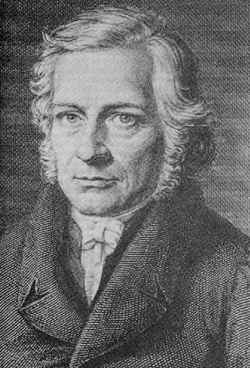
What we can learn from Schleiermacher about Christianity and missions

Romanticism was flourishing in the 18th-19th century when Friedrich Schleiermacher began his ministry. According to Roger Olson, Romanticism was 
  "an emotional reaction to an overemphasis on objective reason in the eighteenth-century Enlightenment. The Romantics reveled in "feelings," by which they meant not irrational emotions but deep, human longings and appreciation for beauty in nature."(1)
This movement created a cynicism towards traditional Christianity. Schleiermacher wanted to find a way to transcend the Romanticism-Christianity divide by showing that there is a point at which the two meet without difficulty.
Schleiermacher "explained that the essence of religion lies not in rational proofs of the existence of God, supernaturally revealed dogmas or churchly rituals and formalities, but in a . . . feeling (Gefühl) of being utterly dependent on something infinite that manifests itself in and through finite things."(2) Gefühl is a German word without an English equivalent, but could be described as a "deep, inner awareness." The word denotes "the distinctly human awareness of something infinite beyond the self on which the self is dependent for everything."(3) It was through this idea that Schleiermacher appealed both to the Romantics and to the Enlightenment thinkers. He explained that the religious "path was to discover and foster that universal human religiousness within themselves . . . and discover their link with the infinite that was already there within themselves."(4) He came to refer to this deep, inner awareness as "God-consciousness" and believed that the essence of Christianity is this "deep awareness of being dependent upon God (God-consciousness) and upon Jesus Christ as one's link to God."(5)

However, we must separate the wheat from the chaff with Schleiermacher, for he was a liberal theologian who attempted to adapt Christianity to modern beliefs. He believed that the Bible is not infallible or inspired but rather "a record of the religious experiences of the earliest Christian communities," because, to him, "talk about God is always talk about human experience of God."(6)
He degraded the importance of the Old Testament because he, like many others, believed it to be inconsistent with the New Testament.
 

Though he did not reject the doctrine of the Trinity, it didn't fit with his doctrine of God-consciousness and so he had doubts about it and deemed it meaningless to theology.
Furthermore, Schleiermacher seemed "to discourage or forbid belief in special divine interventions."(7)
 

He also believed that Jesus Christ was completely human in nature, but "because of [his] potency of God-consciousness, [he] was the Savior of humanity because . . . Through his life and death . . . Christ draws believers into the power of his own God-consciousness and imparts it to them in some measure."(8) Thus, Christ to him was not actually the incarnate God.
It seems like he tried to adapt Christianity to fit everything he thought it should be. 

What can we learn from Schleiermacher about Christianity?
 

Though I wouldn't say that the heart and soul of Christianity is a deep, inner awareness of God (for there is so much more), there is a lot of truth in his teaching on God-consciousness. Every single person was created with a longing for the divine, or, as a friend of mine likes to call it, the unseen. In this, we are dependent upon God. We need God. Human frailty gives evidence to this.

Why are we never satisfied? Why do we always want more? Because there is something beyond everything that we all need and for which we all have a burning desire. It lies in all humans but, of course, many--if not most--are not aware of it. That is why God-consciousness is important. We become aware of our need for God.
Blaise Pascal says it brilliantly;
What else does this craving, and this helplessness, proclaim but that there was once in man a true happiness, of which all that now remains is the empty print and trace?
This he tries in vain to fill with everything around him, seeking in things that are not there the help he cannot find in those that are, though none can help, since this infinite abyss can be filled only with an infinite and immutable object; in other words by God himself.(9)
What can we learn from Schleiermacher about missions?

He spoke the language of his age. He found a way where Christianity could appeal to his generation.
There is a danger in this. The danger is that we would compromise Christianity in order to adapt it to modern thinking. We cannot do this. But we can and should find a way where Christianity as the Bible teaches it meets the need of the human longing we see around us.

What is significant to America today? Love!

How many movies are about love? It seems like every single movie has to have a love relationship in it or it is incomplete.
How many songs on the radio are about love?
 Jefferson Airplane sang,
Don't you want somebody to love?
Don't you need somebody to love?
Wouldn't you love somebody to love?
You better find somebody to love
The Beatles sang,
All you need is love!
Love is all you need!
I could go on because it's everywhere.
Love seems to be the one thing that everybody wants.
Allen Ginsberg wrote, "All we do is for this frightened thing we call Love!"(10)
This should be good news to Christians! Why? Because what does the Bible say that God is? LOVE!
And we have a nation obsessed with the pursuit of love!

People everywhere have fires in their hearts longing for love. Like Paul wrote in Roman, "all creation groans" (Rom. 5:22) because the nature of all things has been upset for all of human history.
Unfortunately, the love our generation finds is not the water they think will put out their fires, but is actually oil labeled "Water." They pour this oil on themselves, completely unaware of the Ocean right behind them.

Our job as disciples of Christ is to become aware and make people aware of that Ocean, to dive in and invite them to dive in with us.
Our job is to introduce them to the salvific love of Christ.

Notes:
(1) Roger E. Olson, "The Father of Modern Liberal Theology: Friedrich Schleiermacher," The Story of Christian Theology: Twenty Centuries of Tradition & Reform (Downers Grove: InterVarsity Press, 1999), 543.
(2) Ibid. I do not say it here but I would like to add that I agree that the essence of Christianity does not lie "in rational proofs of the existence of God, supernaturally revealed dogmas or churchly rituals and formalities."
(3) Ibid., 544.
(4) Ibid.
(5) Ibid.
(6) Ibid., 545.
(7) Ibid., 546.
(8) Ibid.
(9) I couldn't find the exact reference for this. Apparently it's in his Pensees, page 425.
(10) From his "Wichita Vortex Sutra."

Tuesday, May 15, 2012

Christianity, Politics, and King Josiah's Reform

In ancient Israel, King Josiah initiated his famous religious reform as the collapse of Assyria assured freedom for Judah. Around this time, in 622 B.C.E., the temple law book was found. The finding of the law book gave direction to the King's reform. C. Hassell Bullock observes that the "early years of religious reform were marked by renewed hope for Judah, and the discovery of the scroll of the law in 622/21 reinforced and abetted the renewal."(1) This reform did a lot of good for Judah, but, as John Bright observes, it "produced no profound change in the national character."(2)

The prophet Jeremiah accepted his prophetic call the same year the temple law book was found. It is not clear what exactly Jeremiah thought about the reform, but the best explanation I have found is from Bright. He concludes that, though he did not participate in the reform, Jeremiah was in favor of it. However, Jeremiah did not formulate his opinion concerning the spiritual state of Israel merely on the fact that an official reform initiated by the king was taking place. Indeed, that would never satisfy Jeremiah. He would only be satisfied by “a sincere and heartfelt repentance, an inner change in the national character, a wholesale turning on the part of the people to loyal obedience to Yahweh—and this the reform did not produce.”(3)

King Josiah's reform was a good thing, but the people of Israel needed more than a legislative reform. They had sin written on their hearts (Jer. 17:1). No law of man could change that. The reform they needed could only be initiated by God. They needed Him to heal their incurable wound (30:17) and create in them new hearts with His law written inside (31:33).

So many Christians today want King Josiah's reform more than the reform of which the prophets spoke.
Our nation needs more than legislature imposing Christian moral values on all people. Our nation needs more than a law that says homosexuals cannot get married. Our nation needs more than a monument of the Ten Commandments in every school in the country.

The people in our nation need a thorough reform of the soul. They need God to change them from the inside out. They need the gospel. They need the love of Christ to be expressed to them in the deepest way.


Christians today are too busy fighting for moral laws, getting offended by what people do and say, and kicking & screaming every time people make a move away from Christianity.


Why do people move away from Christianity?
Intolerance? Narrow-mindedness? Hypocrisy? Rejection? A lack of love?
Surely none of them would leave because of an exposure to too much love!

Even if Christians could claim power over our nation and establish moral laws that line up with Christianity, would it even be a good idea?
Can you give me a situation in church history when it was a good idea?
How about Calvin's Geneva? Under Calvin, the city council decided that Servetus deserved to die for denying the doctrine of the trinity.
How about Zwingli? He and the city council sentenced thousands upon thousands of Anabaptists to death by drowning simply because they believed that infant baptism isn't biblical.
How about the Roman Catholic Church? Need I say more about it?
Maybe power isn't what Christianity should be fighting for.
Instead of asking how we can help put Christianity in power, maybe we should ask how we can love people.
We need to change this nation from the inside out, not from the outside in with laws establishing our Christian values.
In our country, we should look like Jesus dying on the cross to transform lives.
We should not look like a bunch of angry citizens fighting to "re-establish" a "Christian nation".

The Greek word used for ministry is διακονίᾳ (diakonia) and it means “waiting a table.” It also carries the meaning, “‘discharge of service’ in genuine love”—service being “all significant activity for the edification of the community."(4)
Christ is the bread of life (Jn. 6:35) and the Word of God (1:1). Ministry is the act of serving the Word of God to the world. We are to be waiters and waitresses serving the bread of life to our tables—our communities. How do we do that? LOVE  
The world will know we are Christians by our love! (John 13:35)

Notes:
(1) C. Hassell Bullock, An Introduction to the Old Testament Prophetic Books (Chicago: Moody Press, 1986), 192. 
(2) John Bright, Jeremiah (Garden City: Doubleday, 1965), XXVII
(3) Ibid., XCIV.
(4) Herman W. Beyer, “διακονία,” in Vol. 2 of TDNT, ed. Gerhard Kittel (Grand Rapids: Eerdmans Pub Co, 1964), 87–88.

Thursday, April 26, 2012

What we can learn from Barth and Bultmann on the authority of Scripture

Early in his career, Neo-Orthodox theologian Karl Barth became a pastor of a small town in Switzerland. During his ten years as a pastor, he realized that the liberal theology with which he had come to associate himself became worthless:
  An entire world of theological exegesis, ethics, dogmatics, and preaching, which up to that point I had accepted as basically credible, was thereby shaken to the foundations, and with it everything which flowed at the time from the pens of German theologians.(1)
 His liberal theology could not contribute to his pastoral work. However, he discovered the glorious inspiration and power that lies in Scripture and he found that it was what he needed.(2)
Barth saw the Bible as a fallible witness characterized by humanness. However, he treated it like it was the inerrant Word of God. Because, even if it is a mere witness susceptible to error, he did recognize that it is the source of knowledge about God's activity and Jesus Christ. He also believed that it becomes the divinely inspired Word of God when God uses it to communicate Himself to the reader.(3)
Furthermore, Barth was not interested in finding the historical details of Scripture and he rejected trying to prove God's existence. To him, "The Bible is. Revelation happens. . . . [The Bible's] inspiration lies in God's use of it as a special instrument and witness."(4) Thus, the Bible's real divine significance lies in the subjective experience of God's self-communication to the reader. (This is similar to how John Calvin viewed Scripture. He believed that the "Word of God is a dynamic experience that occurs when Spirit and Scripture interact."(5))
At the end of his career, Barth was asked to summarize briefly his entire life's work. "In the words of a song my mother taught me when I was a child," he said, "'Jesus loves me, this I know, for the Bible tells me so.'"(6)

Another theologian to reject the infallibility of the Bible was Rudolf Bultmann. He believed that the Bible is full of myths. Not myths as we think of them but rather "the ways in which a culture symbolizes and objectivizes its entire world view."(7) Bultmann's conception of myths does not "deny the possibility of a knowledge of truth that is genuine and permanently valid. Rather, mythical utterance in this sense would always be essentially involved in this sort of knowledge, being simply another way of expressing the analogical character of such knowledge."(8) In Scripture, they are symbolic, dramatic images contributing to its message.
With this, Bultmann believed that "theological exegesis can not operate from a detached neutral viewpoint,"(9) but rather, the Bible should be "interpreted in terms of what God says about human existence through the mythological accounts."(10) This hermeneutic is called "demythologization." It is the process “of interpreting the NT in existential terms, that is, of laying bare its kerygma in such a way that it shall immediately strike home to the man of today.”(11) To Bultmann, the Bible's kerygma captures the individual. Again, the focus is a subjective experience of the Bible's message.

What can we learn from this?

We Christians can get so caught up in apologetics that we lose sight of the real power of Scripture. Especially since we are in the third quest for the historical Jesus, the Bible has become something we feel we have to defend.

That being said, we cannot throw the history of the Bible out the window and lean only on a subjective, reader-response method of interpretation. Studying the historical context of the Bible is very important (I am indeed a biblical studies student). But studying the historical context of the Bible only enhances the power of its message. It clarifies what the writers meant, and that clarifies the message, and the message is what is important.

I am not a biblical studies student because I want to prove that the Bible is legitimate; I am a biblical studies student because I want to grow in an understanding of God and his message to humanity.
There are many things we cannot know about the Bible. Biblical scholars for many years have revealed this. But that's okay. We don't need to know. It is not the importance of knowing that the Bible teaches, it teaches the importance of faith. And faith, Abraham Joshua Heschel says, "is derived from our perceptiveness to the word that has gone out to all of us."(12) Faith can be got from the Bible: "It is the Bible that enables us to know the Bible."(13)

"There are no proofs," says Heschel, "Proofs cannot open the gates of mystery for all men to behold. The only thing we can do is open the gates for our own soul for God to behold us."(14) God's presence is in the Bible, but we "cannot sense His presence in the Bible except by being responsive to it."(15)
Instead of defending the integrity of the Bible, try just saying "read it." As Bultmann believed, inside the Bible lies a power that can capture the soul. As Barth believed, the Bible does have difficulties (and anyone in biblical studies knows this), but the essence of the Bible is not in its authenticity as a book full of objective, universal truth claims that explain life, but rather in its authenticity as the source of God's Word. God's Word doesn't need proofs. "Must the sun be labeled with a mark of identification in order to be acknowledged?"(16) The Bible is God-breathed and inspired in that, when one opens his heart and reads it, he is captured by the miraculous power of God's message.

Notes:
(1) Karl Barth, "Concluding Unscientific Postscript on Schleiermacher" in The Theology of Schleiermacher (Edinburgh: T & T Clark, 1982), 262.
(2) See John Webster, "Introducing Barth," in The Cambridge Companion to Karl Barth (Cambridge: Cambridge University Press, 2000), 1-16 (particularly the section "Barth's life," 2-9). 
(3) See Roger E. Olson, "The Founder of Neo-Orthodoxy: Karl Barth," in The Story of Christian Theology: Twenty Centuries of Tradition & Reform (Downers Grove: InterVarsity Press, 1999), 577-586.
(4) Ibid., 583. 
(5) Anthony B. Robinson, & Robert W. Wall, Called to be Church (Grand Rapids: William B. Eerdmans, 2006), 68.
(6) Olson, 579. 
(7) Robert A. Oden, Jr., "Myth and Mythology," in Vol. 4 of The Anchor Bible Dictionary, ed. David Noel Freedman (New York: Doubleday, 1992), 947.
(8) Karl Rahner, and Herbert Vorgrimler, "Myth," in Theological Dictionary, ed. Cornelius Ernst, trans. Richard Strachan (New York: Herder and Herder, 1965), 303.
(9) T. J. Ryan, "Bultmann, Rudolf Karl," in Vol. 2 of New Catholic Encyclopedia, 2nd ed., ed. Berard L. Marthaler (Farmington Hills: Gale, 2003), 690. 
(10) P. J. Cahill, and J. Ryan, "Demythologizing," in Vol. 4 of New Catholic Encyclopedia, 2nd. ed., ed. Berard L. Marthaler (Farmington Hills: Gale, 2003), 657.
(11) Karl Rahner, and Herbert Vorgrimler, "Demythologization," in Theological Dictionary, ed. Cornelius Ernst, trans. Richard Strachan (New York: Herder and Herder, 1965), 121.
(12) Abraham Joshua Heschel, God in Search of Man (New York: Farrar, Straus and Giroux, 1983), 255.
(13) Ibid., 253. 
(14) Ibid., 233.
(15) Ibid., 252.
(16) Ibid., 222.

Friday, April 20, 2012

What makes a heretic? Part 2: John Piper and John Sanders

In open theism, describes John Sanders, 
  God has flexible strategies. Though the divine nature does not change, God reacts to contingencies, even adjusting his plans, if necessary, to take into account the decisions of his free creatures. God is endlessly resourceful and wise in working towards the fulfillment of his ultimate goals. Sometimes God unilaterally decides how to accomplish these goals but he usually elicits human cooperation such that it is both God and humanity who decide what the future shall be. God's plan is not a detailed script or blueprint, but a broad intention that allows for a variety of options regarding precisely how his goals may be reached.(1)
Also, 
  the omniscient God knows all that is logically possible to know. I call this "dynamic omniscience" in that God knows the past and present with exhaustive definite knowledge and knows the future as partly definite (closed) and party indefinite (open). God's knowledge of the future contains knowledge of what God has decided to bring about unilaterally (that which is definite), knowledge of possibilities (that which is indefinite) and those events that are determined to occur (e. g. an asteroid hitting a planet). Hence, the future is partly open or indefinite and partly closed or definite. God is not caught off-guard since he has foresight, anticipating what we will do. Also, it is not the case that just anything may happen, for God has acted in history to bring about events in order to achieve his unchanging purpose. Graciously, however, God invites us to collaborate with him to bring the open part of the future into being.(2)
In a chapter against open theism, John Piper--a very popular and respected Calvinist who was highly inspired by Jonathan Edwards--refers to a story of a young woman whose husband abandoned her. Why would God let me marry him if He knew he would abandon me? she wondered. In order to comfort her and help her keep her faith, her open theist pastor explained to her that God did not know that that was going to happen. 

Piper uses his own story as a response to that.

A woman from his own congregation heard the first story and wrote him a letter responding to it. She said that worse had happened to her with her husband and she was comforted by the fact that God did know what was going to happen and that "God intends this whole thing for my good. It's not just that everything will turn out all right in the end; it's that right now he is working his purpose out in my life, to move me to the next degree of glory."

For this reason, among many others, Piper concludes that open theism is "theologically ruinous, dishonoring to God, belittling to Christ, and pastorally hurtful."(3)

Most evangelicals agree with Piper on this. In 2004, John Sanders lost his tenure and was booted out of  Huntington College because he is an open theist and, worse, a popular one.(4)
This was after being kicked out of the Evangelical Theology Society a year earlier for the same reason.(5)

Does anyone know of a Calvinist that was fired from a University or kicked out of the ETS for being a Calvinist? I sure don't.
Why?

Back to Piper's story.
I suppose it would be better to tell the lady, "Not only did God know about the fact that your husband would abandon you, he caused him to"..........

Somehow, it is better to say that God causes evil than to say that God doesn't know the entirety of the definite future.
Why is that the case?
Why is it that saying the future is partly indefinite to God's knowledge is synonymous with denying Christianity?
And why is it not the same for believing that God is the cause of evil? 
Why isn't Calvinism considered "theologically ruinous, dishonoring to God, belittling to Christ, and pastorally hurtful"? (It definitely is to me)

I would like to add that Sanders wouldn't deny that God is "working his purpose out" in the lady's life. He would say that God adapted to what her husband did and altered his glorious plans for her accordingly.


Notes:
(1) Sanders, John. "An Introduction to Open Theism." Reformed Review (Online) 60, no. 2 (March 1, 2007), 35.
(2) Ibid., 35-36.
(3) See John Piper, "Grounds for Dismay: The Error and Injury of Open Theism," in Beyond the Bounds: Open Theism and the Undermining of Biblical Christianity, eds. John Piper, Justin Taylor, and Paul Kjoss Helseth (Wheaton: Crossway Books, 2003), 371-384.
(4) Stan Guthrie, "Open or Closed Case?" Christianity Today: http://www.christianitytoday.com/ct/2004/decemberweb-only/12-20-32.0.html
(5) Ted Olsen, "ETS Leadership Issues Recommendations on Kicking Out Open Theists." Christianity Today: http://www.christianitytoday.com/ct/2003/octoberweb-only/10-27-41.0.html